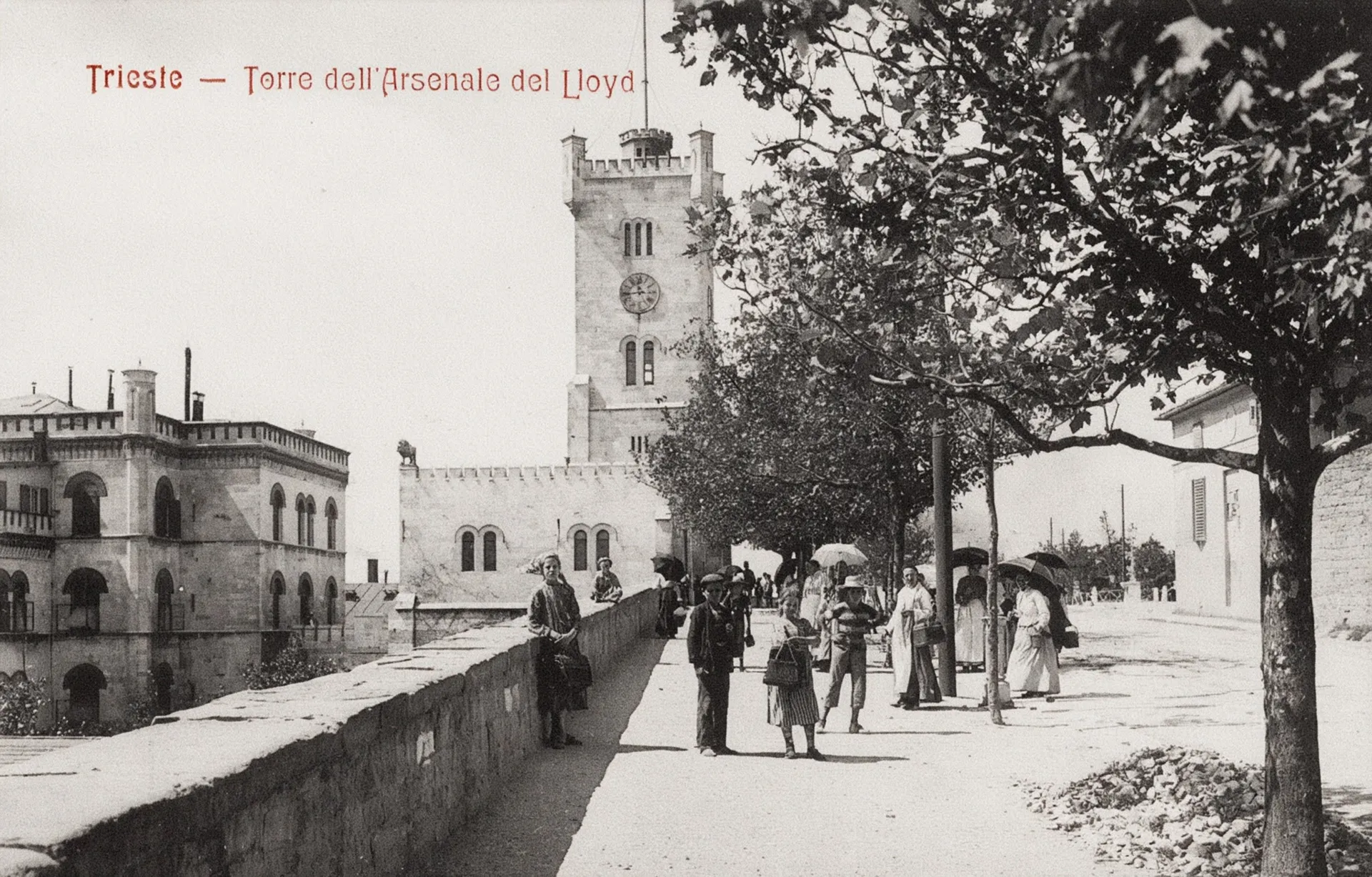
The Arsenale del Lloyd represents one of the largest and most modern European shipyards of the XIX century, located in the port of Trieste, a strategic city of the Habsburg Empire. Spanning about 11 hectares, it was an industrial citadel that combined technical innovation and symbolic importance.
Construction and Origins
Construction began with the laying of the first stone on 30 May 1853, an event presided over by Archduke Maximilian of Habsburg. The project was entrusted to Danish architect Christian Hansen, who imported the best techniques from major European shipyards.
- Advanced technologies: innovative organization and methods for naval production.
- Immediate impact: birth of a cutting-edge industrial hub.
Habsburg Period
During the Habsburg period, the Arsenale became the hub of naval activities for the Lloyd Austriaco, founded in 1833 and the main shipping company that boosted Trieste's commercial development.
- Construction and maintenance: support for the fleet, which became one of the most advanced in the Adriatic.
- Government concessions: tax exemptions in imperial ports granted by Vienna.
These dynamics made Trieste an essential maritime hub in the Empire.
Architecture
The Arsenale is known for its neo-Gothic facade with a crenellated tower, erected between 1852 and 1858. This imposing structure united industrial functionality with an aesthetic that reflected the complex's strategic importance, standing out in Trieste's urban landscape.
Post-WWI and Evolution
In the post-WWI period, marked by the dissolution of the Austro-Hungarian Empire, the Arsenale underwent transformations and uncertainties. From 1921, ships of the former Lloyd Austriaco were incorporated into Lloyd Triestino, altering roles and ownership.
- Impacts of World War II: bombings that damaged the structure.
- Modern adaptations: today seat of the Port Authority of Trieste and a museum on the Austro-Hungarian naval tradition.
Social and Cultural Significance
The Arsenale was not only a production center but also a gathering point for Triestine workers, contributing to shaping the city's maritime identity and its role as a major Mediterranean port.