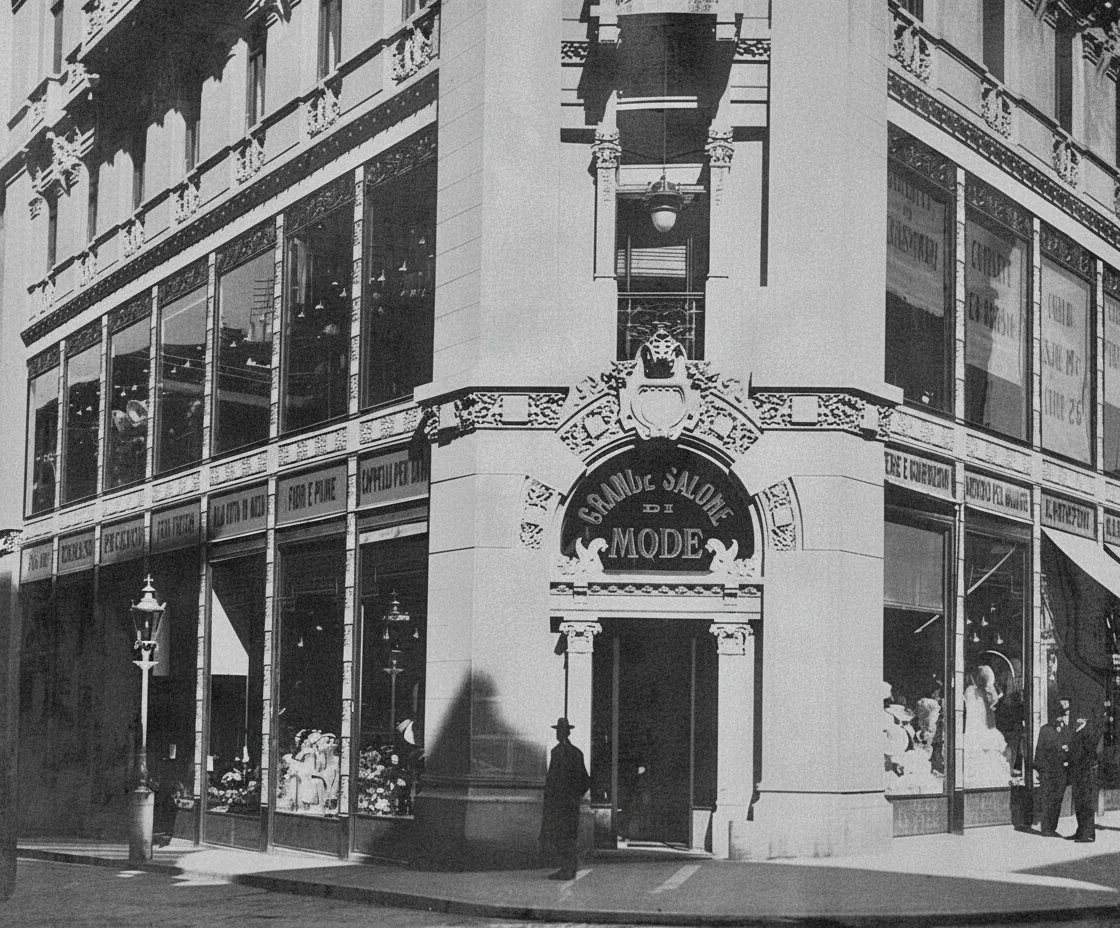
Casa Polacco is an Art Nouveau building located at the intersection of Corso Italia and Via Imbriani in Trieste. It was built in 1909 by architect Romeo Depaoli for the owner Gisella Polacco, replacing a former open space known as "Piazza delle pignatte," a historical nickname stemming from a local market. The building features an irregular floor plan and is set back compared to other properties on the Corso, reflecting the original layout of the square.
Commercial Activities
The ground floor and mezzanine boast large display windows designed for commercial activities. Historically notable businesses included:
- Grande Salone di Mode: a haberdashery popular among Trieste's bourgeoisie, equipped in 1909 with one of the city’s first illuminated signs on Corso Italia
- A bookstore dedicated to Italo Svevo
- The Richard Ginori company
- A branch of Banco di Napoli
Architectural Features
Architecturally, the building is a significant example of the Liberty style in Trieste with influences from Otto Wagner’s Viennese School, featuring elegant and delicate decorations such as pilasters, thistle leaves, and garlands. The windows and openings are adorned with decorative friezes and a projecting cornice tops the facade. Prestige is highlighted by the owner's coat of arms on the chamfered corner and two artistically valuable female statues above the facade.
Historical Significance
Casa Polacco stands as a testament to Trieste’s vibrant commercial and cultural life during the early 20th century. Its strategic location and architectural quality make it an important landmark in the city's urban and social history.