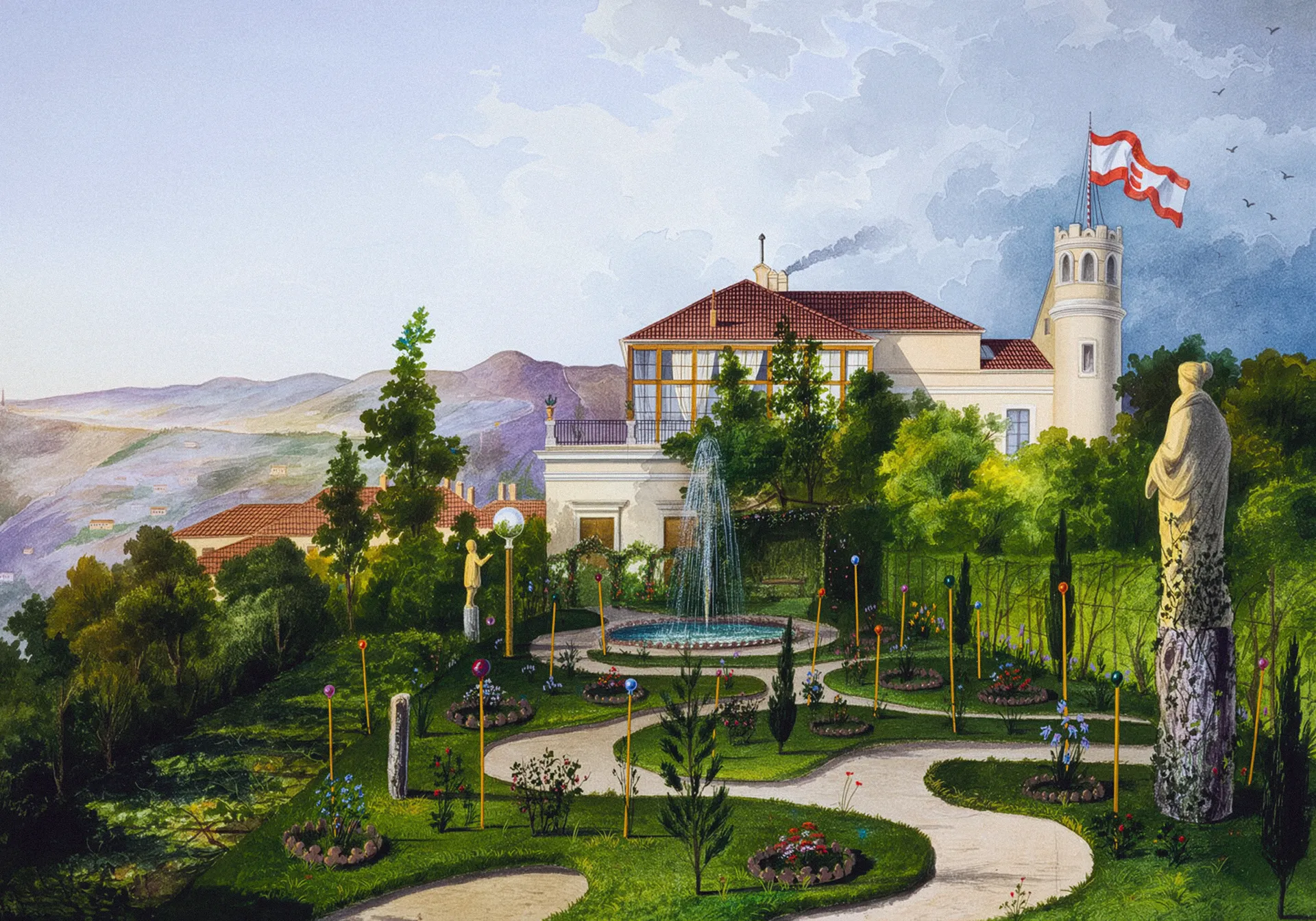
Villa Lazarovich is a historic residence located in the district of San Vito, in Trieste, dating back to 1820, when it was built at the behest of Cesare Abramo de Cassis Faraone. Originally conceived as a modest country house on one floor with a raised central body crowned by a pediment, over time the villa acquired relevance and a more refined style, featuring elements of Moorish influences, visible especially in the characteristic turret still visible today.
Asburgo Period
Among the most significant phases of its history is the Asburgo period, in which Villa Lazarovich became a prominent residence for the Archduke Massimiliano d'Asburgo. In February 1852 Massimiliano settled there, taking it on rent. The villa hosted the future emperor during the period preceding the construction of the Castello di Miramare, the political and symbolic residence of his court. This fact links Villa Lazarovich to a fundamental juncture in Triestine and Asburgo history of the XIX century, conferring upon the building an important historical and cultural significance.
Massimiliano was a passionate botanist and used the villa's garden to cultivate numerous exotic plants, the fruit of his travels around the world, making the green space a place both private and publicly accessible twice a week, underscoring his relationship with the citizenry of Trieste.
Historical Context
The historical context sees Villa Lazarovich as an emblem of an era in which Trieste, a border city of the Impero austro-ungarico, represented a cultural and political center of importance. Massimiliano's stay here anticipates the great environmental and architectural transformation that in the following decade led to the construction of the Castello di Miramare, symbol of the splendor and passions of the archduke.
Post-Asburgo Evolution
After the Asburgo period and with the first post-war period, the villa has maintained its historical value despite undergoing the normal transformations that have affected the hilly area of San Vito. Although not having been the subject of spectacular renovations, it preserves intact original elements and architectural references to its aristocratic past.
Curiosities and Cultural Aspects
- The villa has been mentioned in historical chronicles also in relation to court gossip and family intrigues of the time, especially regarding the relationships between Massimiliano and Francesco Giuseppe.
- Furthermore, Villa Lazarovich stands out for its garden, which reflects Massimiliano's botanical passion and his desire to create a small exotic corner in Trieste.
Contemporary Significance
Today, the building presents itself as an important witness to the history of Trieste, linked to the political, cultural, and personal events of the Archduke Massimiliano and the Asburgo era. The villa invites visitors, students, and history enthusiasts to reflect on a period in which Trieste was the stage for events that marked European and world history.