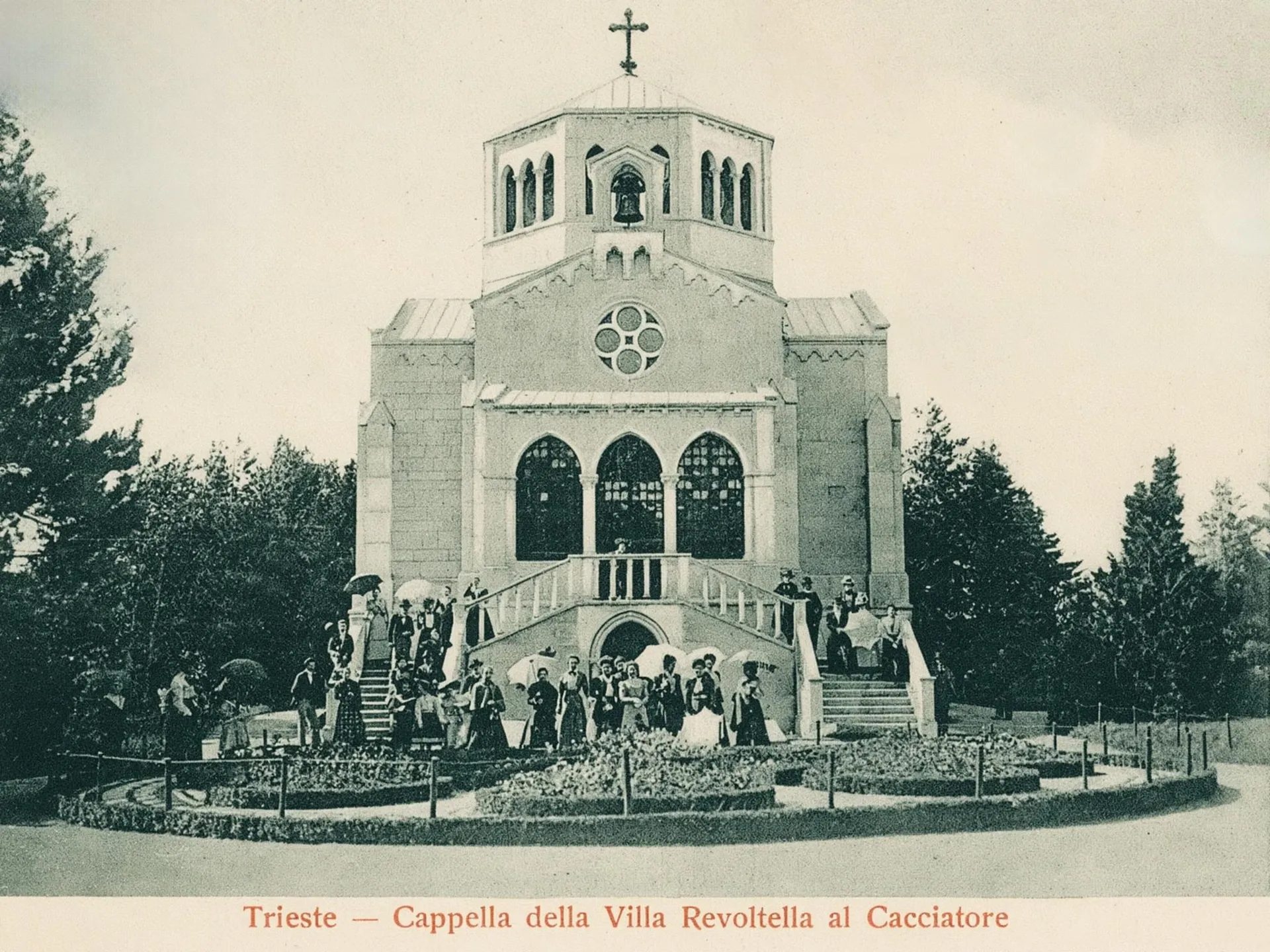
Villa Revoltella is a historic residence located on the Farneto hill in Trieste, characterized by a large complex that extends over about four hectares in a panoramic position dominating the sea.
History and Construction
The villa was designed and built starting from the 1850s by the Berlin architect Friedrich Hitzig, the same one who curated Palazzo Revoltella in the city, as a summer residence for the family of Baron Pasquale Revoltella. Before this transformation, the colle del Cacciatore (today Farneto) was an almost uninhabited and stony area, little frequented by the citizens of Trieste.
Significance During the Habsburg Period
During the Asburgo period, Villa Revoltella represented a symbol of the emerging Triestine bourgeoisie prosperous thanks to trade and the economic expansion of the port and the city under the Impero Austro-Ungarico.
Inheritance and Public Use
Upon the death of Baron Pasquale Revoltella, a noted philanthropist and patron who had received the title of baron from Emperor Francesco Giuseppe in 1867, the villa and the entire park were left in inheritance to the Comune di Trieste through a testamentary bequest. From that moment, the villa became public property and was partly used as a summer residence for the mayor of the city.
Architectural Features
From an architectural point of view, Villa Revoltella stands out for its neo-Renaissance style and elegant rooms. The complex includes:
- Stables: for the family's horses
- Private chapel: personal worship space
- Chaplain's dwelling: dedicated housing
- School-oratory: for education and religious activities
- Gatehouse: controlled entrance
These elements reflect the life and functions of a great bourgeois residence of the nineteenth century.
Post-War Period and Current Status
In the first post-war period, the villa maintained a significant role in the cultural and social context of Trieste; however, many of the most relevant architectural transformations date back to the previous century, while in the subsequent years the complex has been protected and enhanced as the historical-artistic heritage of the city.
Currently, Villa Revoltella is appreciated not only for its history and architecture, but also for the well-maintained park that is loved by Piedmontese and tourists as a place for walks and relaxation. It represents an important link with the Asburgo Trieste and with the cultural roots that have contributed to defining the identity of this border city.