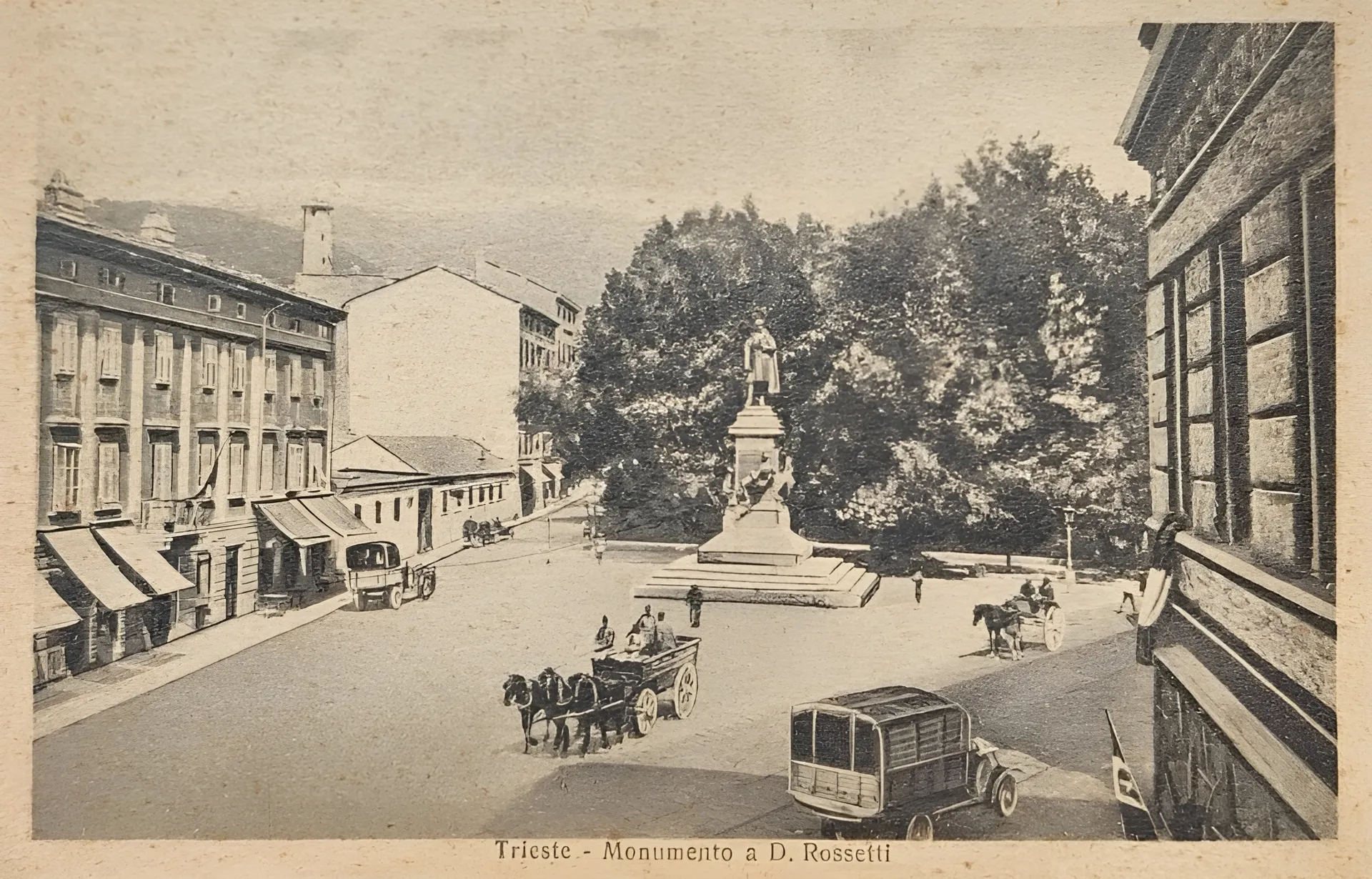
Barriera Nuova is a historic district of Trieste that has played a significant role especially during the Habsburg period and in the immediate post-war period, representing an important gateway to the city and a center for customs and administrative control.
Habsburg Period
During the Habsburg Empire, Barriera Nuova took its name from the office for collecting duties and tolls located along one of the main connecting roads prior to modern urban development.
- Strategic position: marked the entrance to the city from the northwest.
- Historical connection: linked to the important road opened by Emperor Francesco I d’Habsburg in 1830, as recalled by the obelisk of Opicina, a symbol of the imperial will to improve connections between Trieste, Italy, and Germany.
- Ancient roots: this road was historically connected to the Roman road that linked the Adriatic to central-eastern Europe through the Carso (the «pass of the Ocra»).
This node underscored the importance as a cultural and economic crossroads.
Architectural Aspects
From an architectural point of view, Barriera Nuova is characterized by a set of administrative and customs buildings, many of which date back to the XIX century, reflecting the sober and functional style of the Habsburg era.
In the following years, especially in the immediate post-war period, the district maintained its vocation as a fundamental hub for trade and the control of goods entering and leaving the port of Trieste, which at that time represented a significant economic hub at the European level.
Social and Cultural Aspects
Socially and culturally, Barriera Nuova was a meeting place between different ethnic and linguistic communities present in Trieste thanks to its port and customs function.
- Contribution to multiethnic fabric: has contributed to a multiethnic fabric that still characterizes the area.
- Social transformations: testifying to the changes that occurred during the Habsburg period and in the subsequent decades, during the annexation to the Kingdom of Italy after the First World War.
Evolution and Historical Significance
Despite the modifications and urban developments of the XX century, Barriera Nuova preserves architectural and symbolic testimonies that recount the long history of Trieste as a border city, a crossroads of peoples and cultures, as well as a reference point in the imperial and then national port and commercial system.
According to some interpretations, this area represents not only a physical but also a metaphorical boundary, testifying to the political and social transformations that have traversed Trieste from the Habsburg period to the new European realities of the immediate post-war period.
Further specific insights into the buildings, places of worship, or minor architectures within the district require more detailed archival studies, currently not available in the consulted sources.