The Dreher saga intertwines the invention of Vienna lager, Trieste's first beer factory, and a palace that became the social heart of the Belle Époque. A story of industrial innovation, splendor, and painful decline.
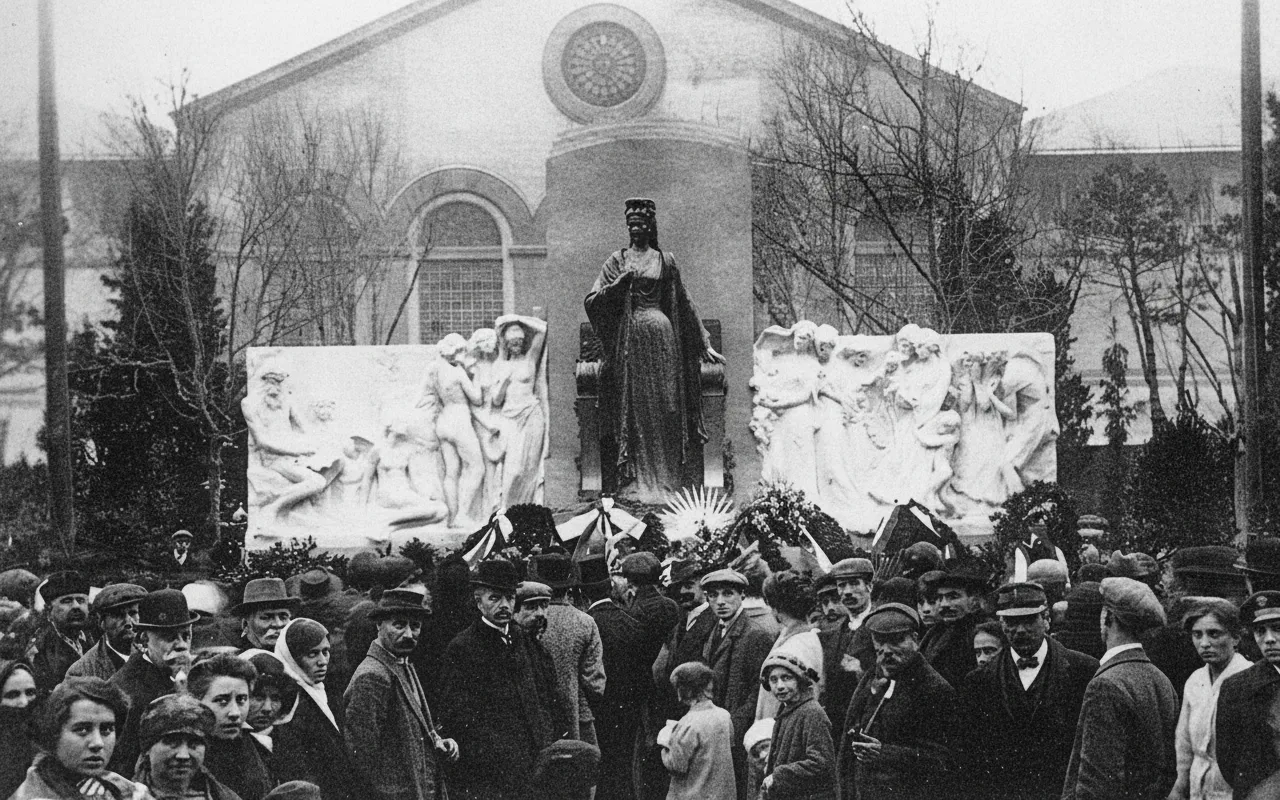
Between 1869 and 1896 Empress Elisabeth of Austria stayed in Trieste fourteen times, using Miramare Castle as her base for voyages across the Mediterranean. Discover the places, stories and monument that still commemorate her today.
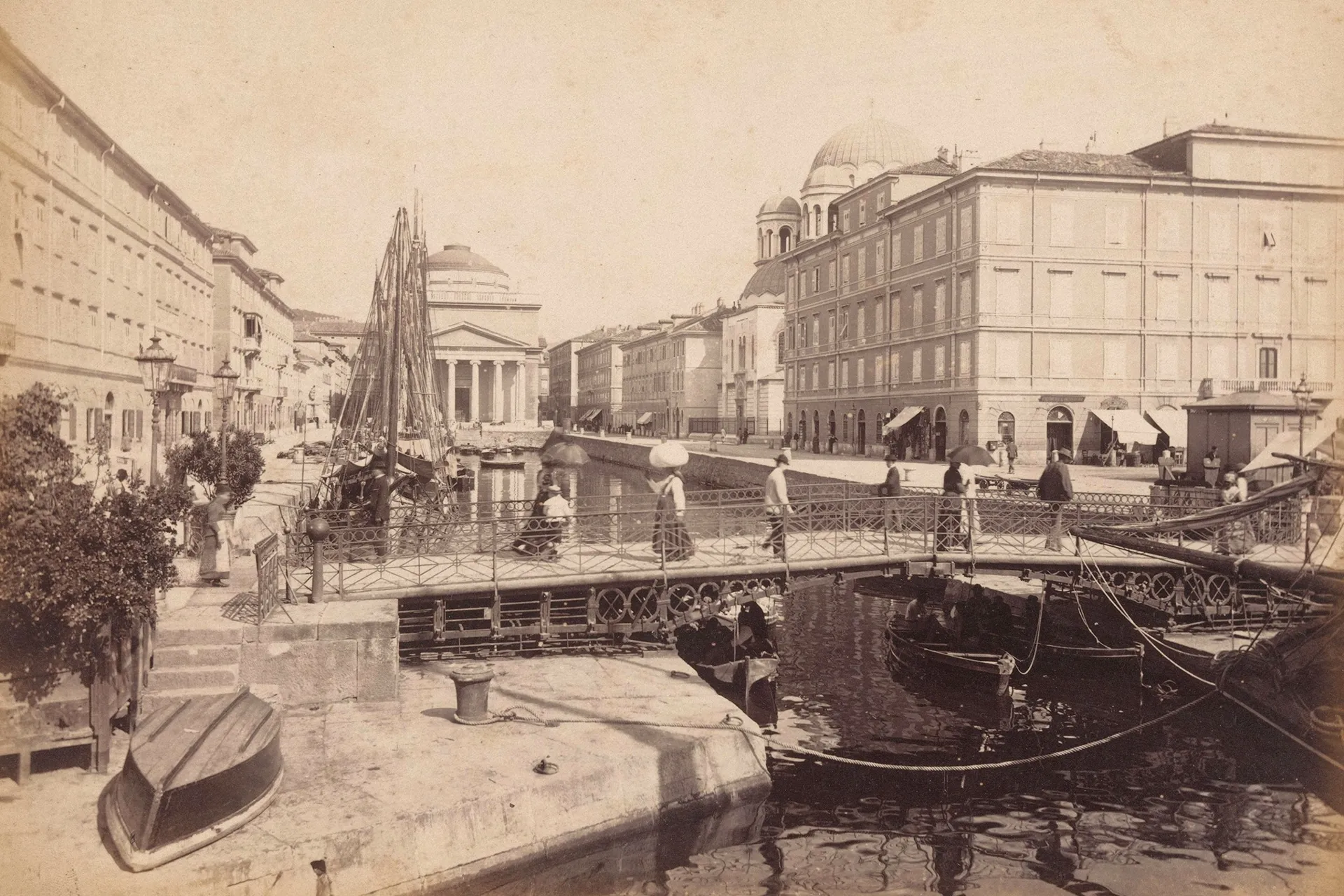
In 1719, Emperor Charles VI transformed Trieste from a border outpost into a crossroads of world trade. The story of the Free Port, the communities that brought it to life, and the legacy that still shapes the city today.
Roman Tergeste, medieval walls, city gates, Habsburg fortifications and the two surviving castles: a journey through what remains of fortified Trieste, demolished by order of Maria Theresa and reshaped by the Empire.
The story of the Opicina tram, from the Habsburg concession of 1901 to the hybrid funicular system unique in Europe: more than 120 years of a Trieste icon.
For more than sixteen years, from 1904 to 1920, James Joyce lived in Austro-Hungarian Trieste. Discover the places, friends and works that took shape in this Central European city which gave Ulysses its form.
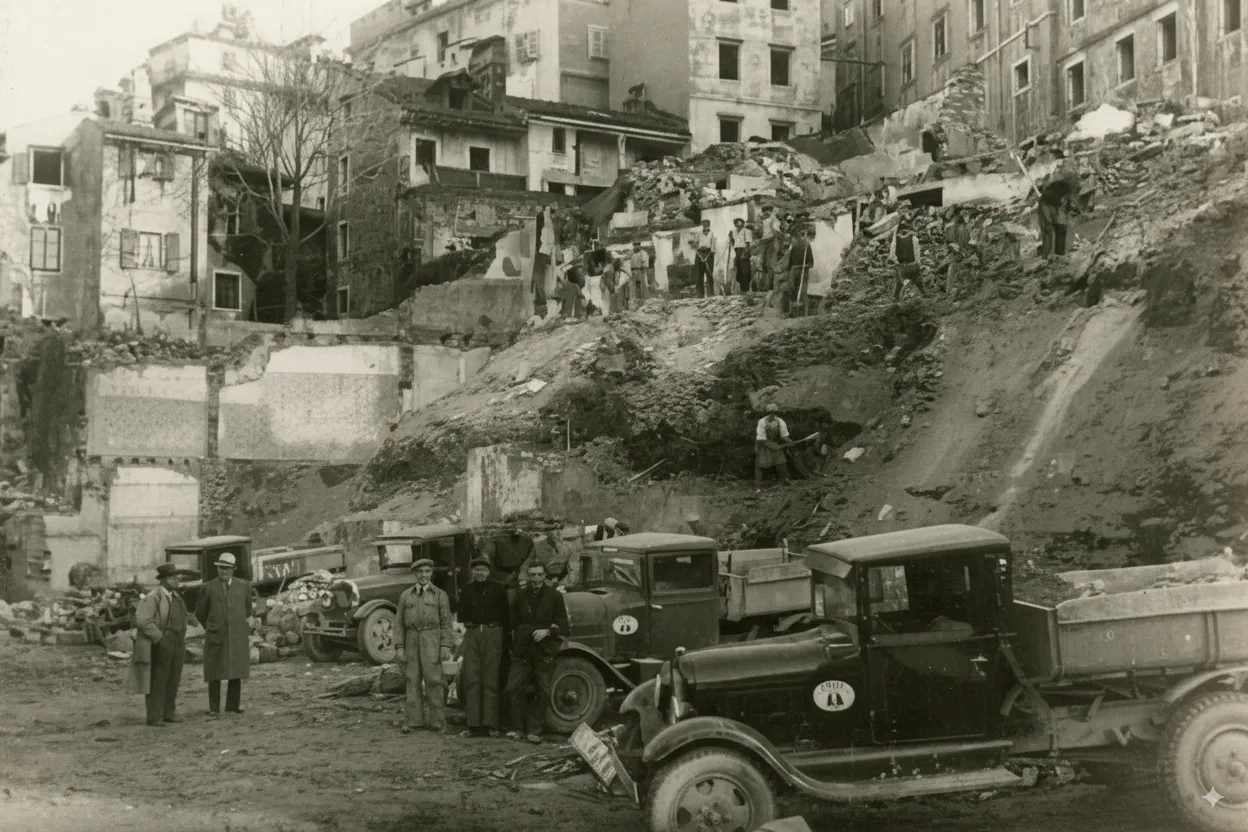
Between 1934 and 1938 the Fascist regime demolished 181 houses, 373 shops and four synagogues in Trieste's medieval heart, uprooting more than 2,000 families in the name of the 'pickaxe of redevelopment'.
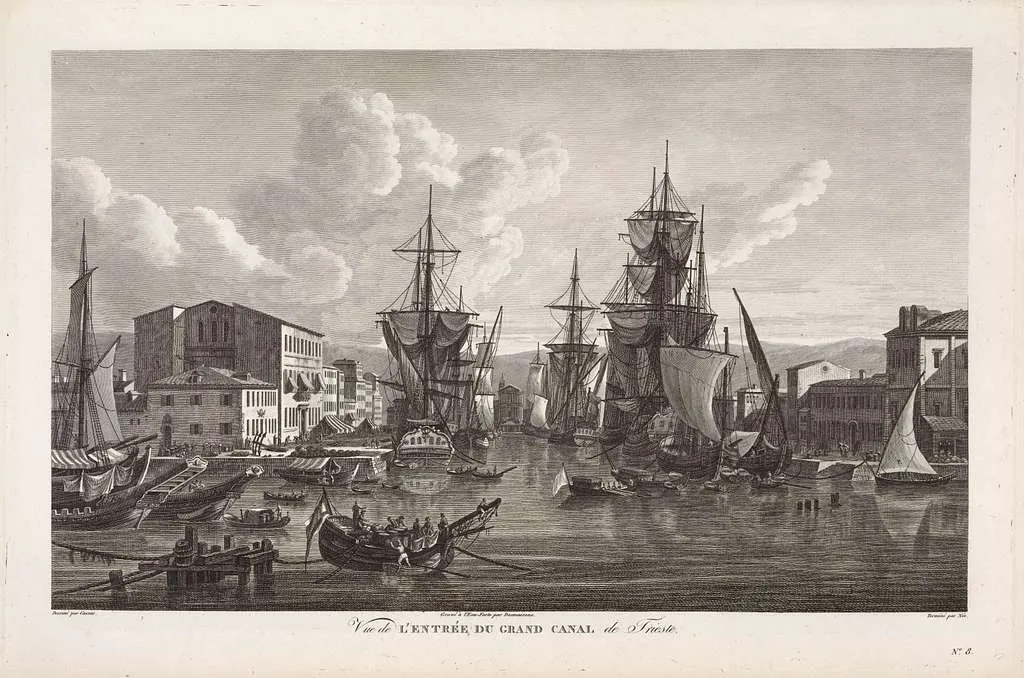
Three French occupations, the Treaty of Schönbrunn, the Illyrian Provinces, the siege of San Giusto Castle and the exile of the Bonapartes: the sixteen years in which Trieste lost and regained its free port.
Tergestino was a Rhaeto-Romance language related to Friulian, spoken in Trieste for centuries until the nineteenth century. Overwhelmed by Venetian after the 1719 free port, it survives in place names and in Mainati's Dialogues.